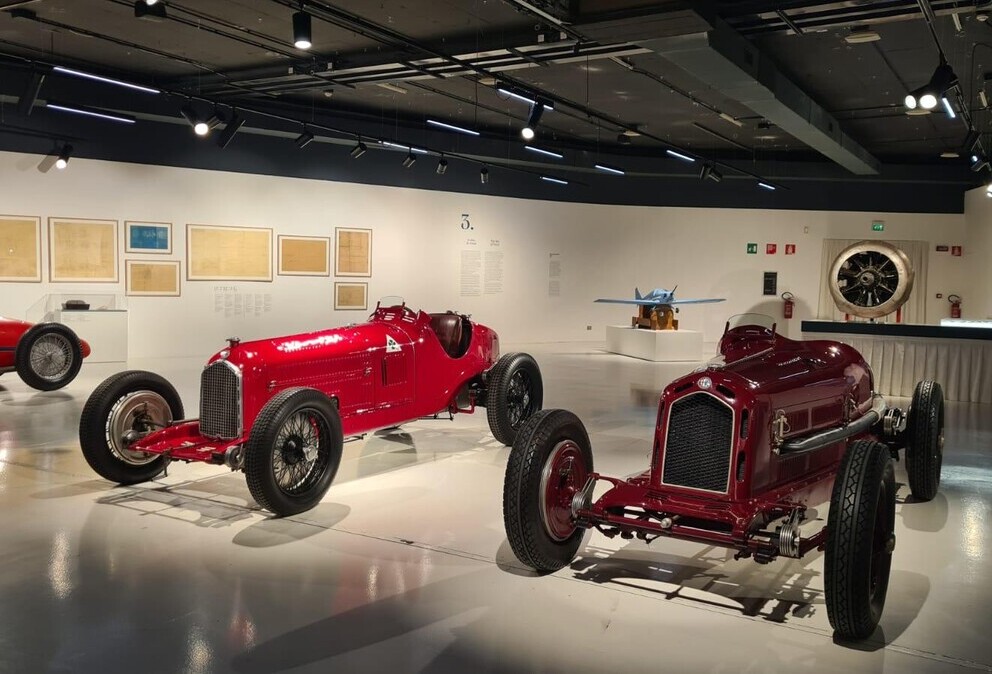
On May 14, at MAUTO – the National Automobile Museum in Turin – the exhibition Carlo Felice Trossi: The Unfinished Hero was presented, dedicated to the multifaceted figure of the racing driver from Biella.
The exhibition — curated by historian and essayist Giordano Bruno Guerri, with artistic direction by Maurizio Cilli, contributions from YCI Member Francesco Foppiano for the nautical and aeronautical sections, and with the support of Ilaria Pani and Davide Lorenzone, respectively Heads of MAUTO’s Documentation Center and Conservation and Restoration Center — unfolds along a path of discovery that brings together cars, aircraft, boats, photographic testimonies, drawings, and a wide array of memorabilia.
Together, these elements narrate not only the story of a great driver, but also of a true protagonist of his time, a man who embodied elegance, freedom, and intellect during an era of delicate political, social, and cultural balances.
The exhibition will be open to the public from May 15 to September 28, 2025.
The Yacht Club Italiano played an active and meaningful role in this exhibition:
First, because Trossi was a Member of the Club.
Maurizio Fracassi (Member and Trossi’s nephew) donated all materials to MAUTO, making the exhibition possible.
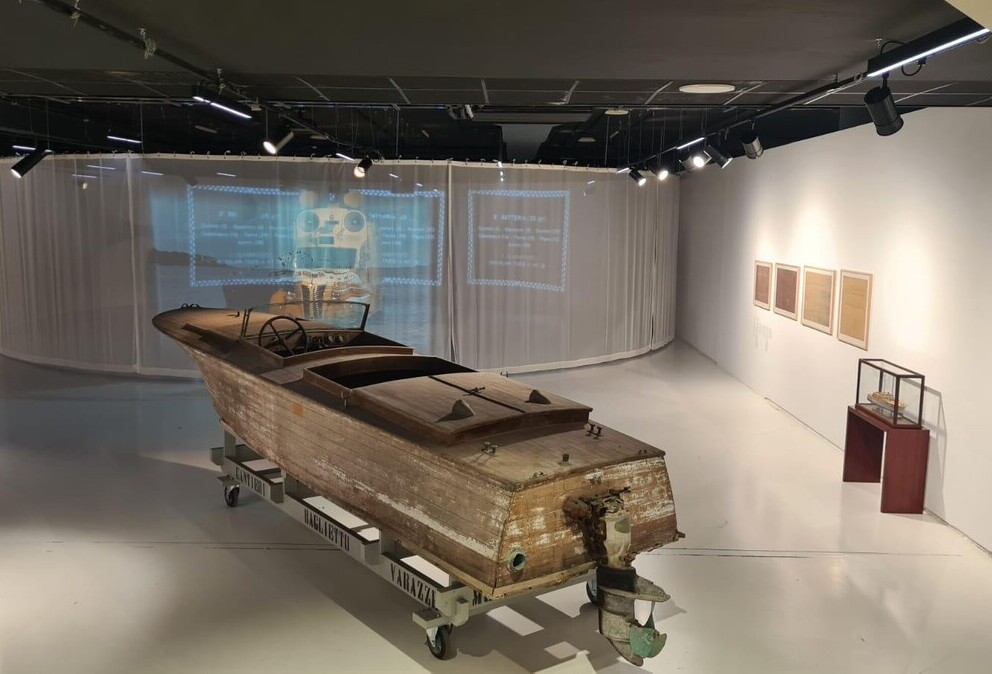
Francesco Foppiano acted as co-curator, and Member and collector Corrado Lopresto contributed the boat Mio Mao — a 7.2-meter mahogany runabout, built by the Baglietto shipyard between 1929 and 1930 on commission from the Piaggio family, featuring a double-diagonal planking structure.
Lastly, the Club provided numerous documents and items essential to the realization of this exceptional exhibition.
Carlo Felice Trossi, born in Biella in 1908 — and named Count in 1934 for his sporting merits — was a unique 20th-century figure: racing driver, aviator, designer and builder of cars and boats, and executive.
He was one of the first presidents of Ferrari, and Enzo Ferrari himself described him as
"a man who, with imaginative flair and playful ease, did things that others would have considered impossible — both in life and on the track."
Connected to the world of rationalist architecture and a personal friend of Pier Luigi Nervi, his refined and cultured taste extended far beyond the realm of sport.